 EN
EN

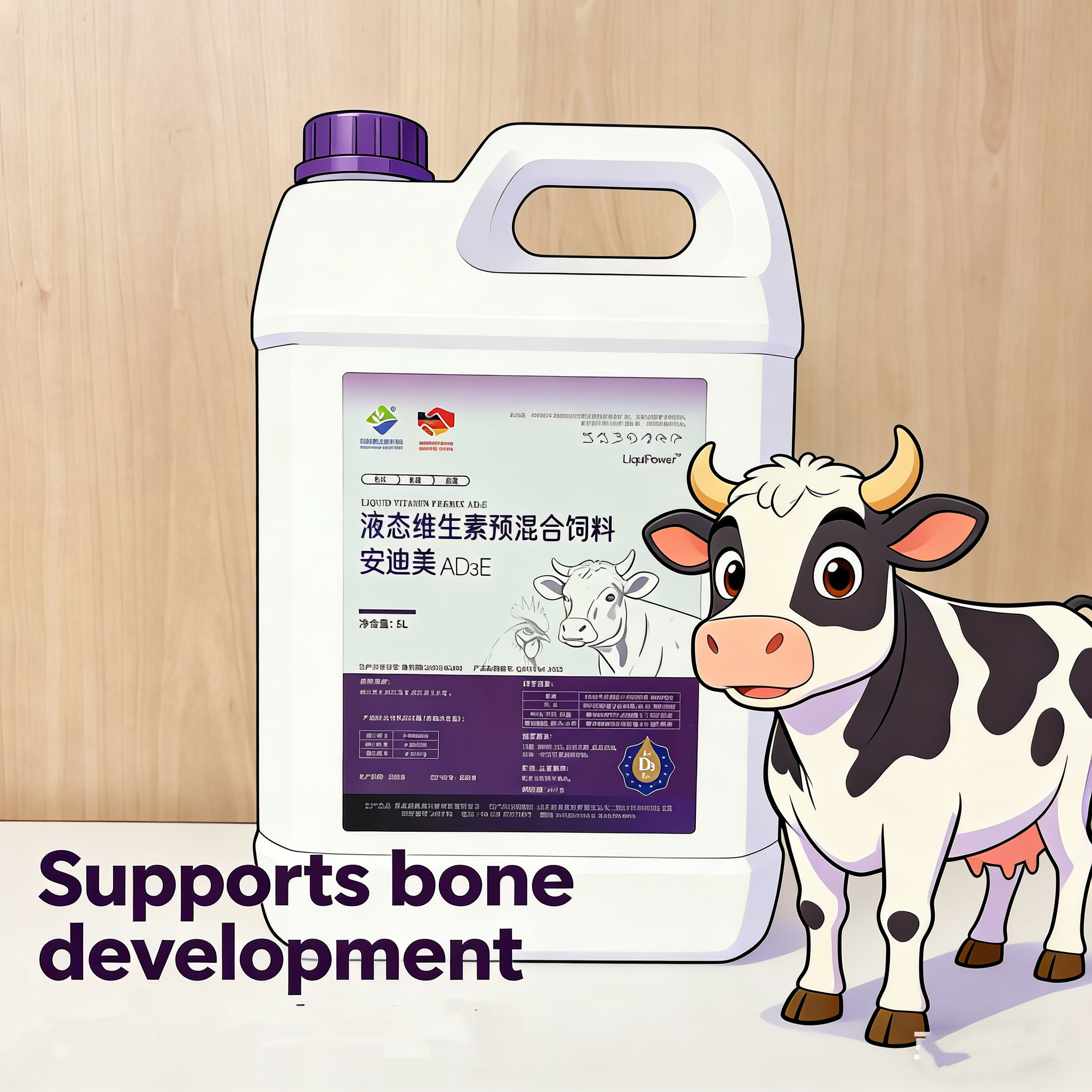
Enhanced Calcium Bioavailability Through Liquid Premix Formulations
Why solubility and timing matter: Calcium metabolism and nocturnal shell gland calcification
Eggshell mineralization occurs predominantly during the dark period when hens are not feeding—yet the shell gland demands a sustained supply of ionic calcium from the bloodstream. Any shortfall triggers mobilization of medullary bone, increasing the risk of structural bone loss and thin, fragile shells. Solubility is the gatekeeper of absorption: conventional coarse limestone dissolves poorly in the neutral pH of the duodenum, leaving much calcium unabsorbed precisely when demand peaks. Liquid premix formulations deliver calcium in a fully dissolved, pre-ionized state—bypassing dissolution entirely—and ensure a rapid, timed rise in circulating calcium ions that aligns with the circadian peak of shell gland activity. When paired with liquid vitamin D3, which upregulates intestinal calcium-binding proteins, this approach maximizes transport capacity during critical nocturnal hours. The result is reduced dependence on bone reserves and consistently denser, more fracture-resistant eggshells.
Amino acid chelates vs. inorganic salts: Superior bioavailability of liquid calcium sources
Calcium absorption from inorganic salts relies on passive paracellular diffusion and active transcellular transport—processes easily saturated or inhibited by dietary antagonists like phytates or excess zinc. In contrast, amino acid chelates such as calcium bisglycinate remain stable and soluble across the gastrointestinal tract and are absorbed intact via peptide transporters (PepT1), avoiding mineral competition and delivering calcium directly to enterocytes. A 2018 clinical study in osteopenic patients found calcium lysinate significantly improved bone mineral density compared to calcium carbonate or citrate malate—confirming its superior bioavailability. Liquid premix leverages this advantage by formulating calcium as a stable chelate in solution, eliminating dissolution delays and resisting precipitation. Combined with co-delivered liquid vitamins K2 and D3, it optimizes activation of osteocalcin and matrix Gla protein—directing more calcium into the eggshell matrix with greater precision. This enhanced utilization efficiency translates directly into fewer cracked and broken eggs, even under physiological stress.
Liquid Vitamins and Trace Minerals as Critical Cofactors in Biomineralization
Eggshell quality hinges on tightly coordinated biomineralization—a process dependent on enzymatic cofactors supplied by vitamins and trace minerals. Liquid premix formulations overcome key limitations of dry powders: poor solubility, oxidation of labile compounds, and inconsistent gut release. The aqueous environment preserves sensitive nutrients and enables rapid passive diffusion—especially valuable during the high-demand nocturnal calcification window.
Zinc, manganese, and copper in liquid form support carbonic anhydrase and lysyl oxidase activity
Liquid trace mineral premixes deliver zinc, manganese, and copper in highly soluble, bioavailable forms—critical for sustaining enzymatic activity in the shell gland. Zinc is the catalytic core of carbonic anhydrase (CA), the enzyme that converts CO₂ and water into bicarbonate (HCO₃⁻), the essential carbonate source for calcium carbonate deposition. Copper serves as a cofactor for lysyl oxidase (LOX), which cross-links collagen and elastin in the shell membrane—enhancing tensile strength and preventing micro-cracks. Manganese supports glycosyltransferase activity, enabling synthesis of the organic matrix scaffold that anchors mineral crystals. Together, these three elements—delivered in liquid form—maintain the enzymatic infrastructure required for robust, crack-resistant shell formation.
Synergy of liquid vitamins D3 and K2 with calcium for matrix mineralization and crystal alignment
Liquid vitamins D3 and K2 act synergistically to direct calcium from absorption to precise deposition in the shell. Vitamin D3 induces expression of calbindin-D28k in both the intestine and uterine shell gland, boosting active calcium transport into the calcification site. Vitamin K2 activates γ-glutamyl carboxylase, which post-translationally modifies osteocalcin-like proteins and matrix Gla protein—enabling them to bind calcium and guide its ordered incorporation into calcite crystal columns. This dual action prevents ectopic mineralization while promoting uniform crystal alignment and density—key determinants of fracture toughness. Pre-emulsified liquid delivery ensures maximal absorption of these fat-soluble vitamins, allowing hens to maintain this synergy even under metabolic stress.
Proven Field Efficacy: Liquid Premix Reduces Cracked Eggs Under Production Stress
Commercial flocks routinely face production stressors—heat, aging gut function, and peak lay demands—that compromise calcium absorption and shell integrity. Liquid premix technology addresses these challenges at the point of uptake: by delivering calcium, vitamins, and trace minerals in highly bioavailable, rapidly absorbed forms, it enables swift correction of nutritional gaps before shell defects emerge. Multi-farm field trials demonstrate consistent improvements: a 2–3% gain in feed-to-egg ratio, 3–5% increase in egg production, and 2–5% rise in egg weight—all accompanied by measurable reductions in shell defects. Liquid B-complex vitamins further support shell gland metabolism and epithelial integrity, while D3 and K2 enhance calcium flux and crystalline organization. By lowering cracked egg incidence, producers reduce downgraded eggs and improve flock profitability—validating liquid premix as a resilient, evidence-based strategy for maintaining shell quality under real-world conditions.
Innovative Additions: Plant-Based Extracts and Calcium Pidolate in Liquid Premix
Calcium pidolate and phytogenic extracts enhance shell matrix protein synthesis and structural integrity
Next-generation liquid premixes integrate calcium pidolate—a highly bioavailable organic calcium salt—with standardized plant-based extracts (e.g., oregano, thyme, and citrus-derived phenolics) to strengthen the organic foundation of the shell. These components stimulate synthesis of key matrix proteins—including ovocleidin-17, ovocalyxin-32, and ansocalcin—which regulate crystal nucleation, growth, and spatial arrangement. When combined with liquid D3 and K2, they reinforce the coordination between organic template development and mineral deposition, yielding shells with improved thickness, uniformity, and resistance to microfracture. Field reports from commercial layers confirm lower crack rates and higher shell strength during peak production—particularly in flocks over 40 weeks of age—demonstrating how targeted molecular nutrition complements classical mineral supplementation.
FAQ
What is the main advantage of liquid premix calcium formulations over traditional calcium sources?
Liquid premix calcium formulations provide fully dissolved, pre-ionized calcium, ensuring rapid absorption and availability precisely when calcium demand peaks during eggshell formation.
How do amino acid chelates improve calcium absorption compared to inorganic salts?
Amino acid chelates like calcium bisglycinate are absorbed intact via peptide transporters, avoiding competition with other minerals and enhancing bioavailability compared to traditional inorganic calcium salts.
Why are liquid vitamins and trace minerals important for eggshell quality?
Liquid vitamins and trace minerals offer superior bioavailability and solubility, preserving sensitive nutrients and optimizing enzymatic reactions critical for biomineralization during nocturnal shell formation.
How do liquid vitamins D3 and K2 support matrix mineralization?
Vitamin D3 enhances calcium transport, while vitamin K2 activates proteins that guide calcium deposition into organized crystals, improving shell density and fracture resistance.
What production benefits have been observed with liquid premix products?
Field trials report improved feed-to-egg ratio, increased egg production and weight, and reduced cracked egg incidence, demonstrating their efficacy in enhancing shell quality and flock profitability.
Table of Contents
- Enhanced Calcium Bioavailability Through Liquid Premix Formulations
- Liquid Vitamins and Trace Minerals as Critical Cofactors in Biomineralization
- Proven Field Efficacy: Liquid Premix Reduces Cracked Eggs Under Production Stress
- Innovative Additions: Plant-Based Extracts and Calcium Pidolate in Liquid Premix
- FAQ