 EN

Liver Metabolism Fundamentals in Chickens: Lipid Synthesis, Oxidation, and Export
De novo lipogenesis, mitochondrial β-oxidation, and VLDL assembly in avian hepatocytes
The chicken liver is the central hub for lipid metabolism—uniquely active in de novo lipogenesis (DNL), mitochondrial β-oxidation, and very-low-density lipoprotein (VLDL) assembly. Unlike mammals, avian hepatocytes convert excess dietary carbohydrates into fatty acids at a high rate, primarily synthesizing palmitate, which is rapidly esterified into triglycerides. These triglycerides are packaged into VLDL particles via microsomal triglyceride transfer protein (MTP) and apolipoprotein B-100 (apoB-100) for export—especially to the ovary in laying hens, where they supply yolk lipids. When energy influx exceeds export or oxidation capacity, triglycerides accumulate as cytoplasmic lipid droplets. Conversely, during fasting or elevated energy demand, mitochondrial β-oxidation breaks down stored fatty acids to generate ATP. The entry of long-chain fatty acids into mitochondria is governed by carnitine palmitoyltransferase-1 (CPT-1), making it a critical control point. In modern high-yield layers, the sustained demand for yolk lipids creates extraordinary hepatic lipid flux; even minor imbalances between DNL, VLDL export, and β-oxidation can rapidly tip the scale toward pathological steatosis and fatty liver syndrome.
Key regulatory enzymes: ACC, FAS, CPT-1, and their nutrient-sensitive expression
Acetyl-CoA carboxylase (ACC) and fatty acid synthase (FAS) drive hepatic lipogenesis in chickens, with ACC catalyzing the rate-limiting conversion of acetyl-CoA to malonyl-CoA—the committed step in DNL—and FAS elongating the chain to yield palmitate. Crucially, malonyl-CoA also inhibits CPT-1, ensuring that fatty acid synthesis and oxidation remain reciprocally regulated. This coordination prevents metabolic conflict but also means that nutrient-driven upregulation of ACC/FAS can directly suppress fat burning. Expression of these enzymes is tightly controlled by hormonal and dietary signals: insulin (elevated post–high-starch feeding) activates sterol regulatory element-binding protein-1c (SREBP-1c), boosting transcription of ACC and FAS; glucagon (dominant during fasting) enhances CPT-1 activity and promotes β-oxidation. Dietary methyl donors—including methionine and choline—further modulate this system by influencing epigenetic regulation and enzyme stability. In commercial layers fed energy-dense rations, chronic hyperinsulinemia can elevate ACC and FAS expression beyond physiological capacity. Without proportional upregulation of VLDL assembly machinery or CPT-1–mediated oxidation, the liver becomes overwhelmed—highlighting how dysregulation of just a few nutrient-sensitive enzymes can destabilize the entire hepatic lipid balance.
Liver Metabolism Disruption Triggers Fatty Liver Syndrome Pathogenesis
From insulin resistance to hepatic lipid accumulation: The metabolic cascade in high-yield layers
Fatty liver syndrome in high-yield layers arises not from isolated defects, but from a self-reinforcing metabolic cascade driven by chronic nutrient overload. Four interdependent phases accelerate hepatic lipid accumulation:
| Phase | Key Disruption | Consequence |
|---|---|---|
| Insulin Resistance | Hepatic insulin signaling blunts despite systemic hyperinsulinemia. | Unchecked activation of SREBP-1c drives excessive DNL. |
| Excessive Hepatic Lipogenesis | Carbohydrates flood the liver beyond glycogen storage capacity, overwhelming β-oxidation. | Triglycerides accumulate as cytoplasmic lipid droplets. |
| VLDL Assembly Failure | Hepatocytes become saturated—MTP activity declines and apoB-100 synthesis falters under oxidative and ER stress. | Triglyceride export collapses, trapping fat intracellularly. |
| Self‑Propagating Loop | Accumulated lipids impair mitochondrial function and exacerbate insulin resistance. | Steatosis accelerates, progressing to clinical fatty liver syndrome within days. |
This cascade reflects a systems failure—not a single enzyme defect—but one rooted in the mismatch between genetic selection for production and nutritional management.
Inflammation as consequence, not cause: TLR4/NF‑κB activation secondary to metabolic overload
Hepatic inflammation in fatty liver syndrome is a downstream effect of metabolic dysfunction—not its origin. As lipid droplets expand, free fatty acids and reactive lipid peroxidation products (e.g., 4-hydroxynonenal) spill into the cytosol and extracellular space. These act as damage-associated molecular patterns (DAMPs) that bind Toll-like receptor 4 (TLR4) on Kupffer cells, triggering NF-κB nuclear translocation and upregulating pro-inflammatory cytokines like TNF-α and IL-6. However, this immune response emerges only after substantial lipid accumulation and mitochondrial stress have already compromised cellular homeostasis. Critically, interventions that restore metabolic flux—such as supporting VLDL export or enhancing β-oxidation—reduce inflammation without immunosuppressants, confirming that inflammation is a biomarker and amplifier—not the driver—of disease. Therapeutic focus must therefore remain on rebalancing hepatic lipid handling.
Liver Metabolism–Targeted Nutritional Strategies for Sustainable FLS Prevention
Methyl donors (choline, betaine) and fatty acid shuttle support (L-carnitine) to restore metabolic flux
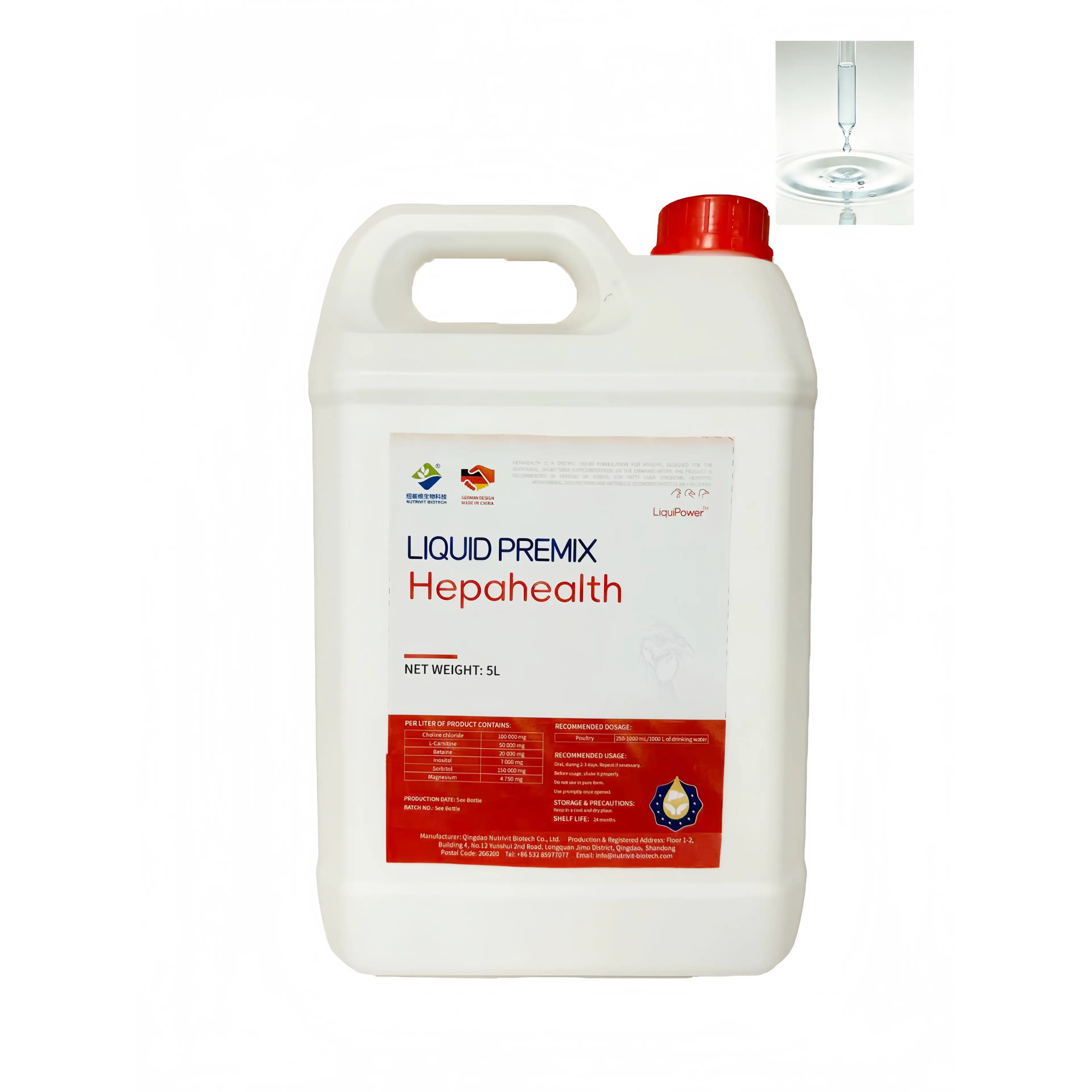
Preventing fatty liver syndrome requires targeted nutritional support that directly addresses the two core bottlenecks in avian liver metabolism: impaired VLDL assembly and insufficient mitochondrial fatty acid oxidation. Choline is indispensable—not merely as a nutrient, but as the structural backbone of phosphatidylcholine, a required component of the VLDL particle envelope. Deficiency forces triglycerides to remain unsecreted, initiating steatosis within hours. Betaine complements choline by acting as a methyl donor in the remethylation of homocysteine to methionine, thereby sparing dietary choline for VLDL synthesis and reducing the liver’s methyl-group burden. Meanwhile, L-carnitine enables the rate-limiting transport of long-chain fatty acyl-CoA across the inner mitochondrial membrane—a step essential for β-oxidation. Under conditions of high lipogenesis, endogenous carnitine synthesis may be insufficient, and dietary supplementation ensures fatty acids are directed toward energy production rather than storage. Together, methyl donors and L-carnitine create a coordinated “push-pull” effect: choline and betaine push triglycerides into VLDL for export, while L-carnitine pulls fatty acids into mitochondria for oxidation. This dual-pathway strategy restores metabolic flux, aligning with the liver’s natural physiology in high-yield layers—and offering a sustainable, mechanism-based approach to FLS prevention.
FAQ
What is the main role of the chicken liver in lipid metabolism?
The chicken liver is highly active in de novo lipogenesis, mitochondrial β-oxidation, and the assembly of very-low-density lipoproteins (VLDL), which are primarily exported to support yolk lipid synthesis in laying hens.
What causes fatty liver syndrome in high-yield chickens?
Fatty liver syndrome in high-yield layers results from a metabolic cascade triggered by chronic nutrient overload, culminating in lipid accumulation and mitochondrial dysfunction.
How does choline prevent fatty liver syndrome in chickens?
Choline is essential for forming phosphatidylcholine, a component required for VLDL particle formation. Without sufficient choline, triglycerides cannot be exported, leading to steatosis.
What role does L-carnitine play in preventing fatty liver syndrome?
L-carnitine facilitates the transport of long-chain fatty acids into mitochondria for β-oxidation, preventing their accumulation as intracellular triglycerides.