 EN
EN

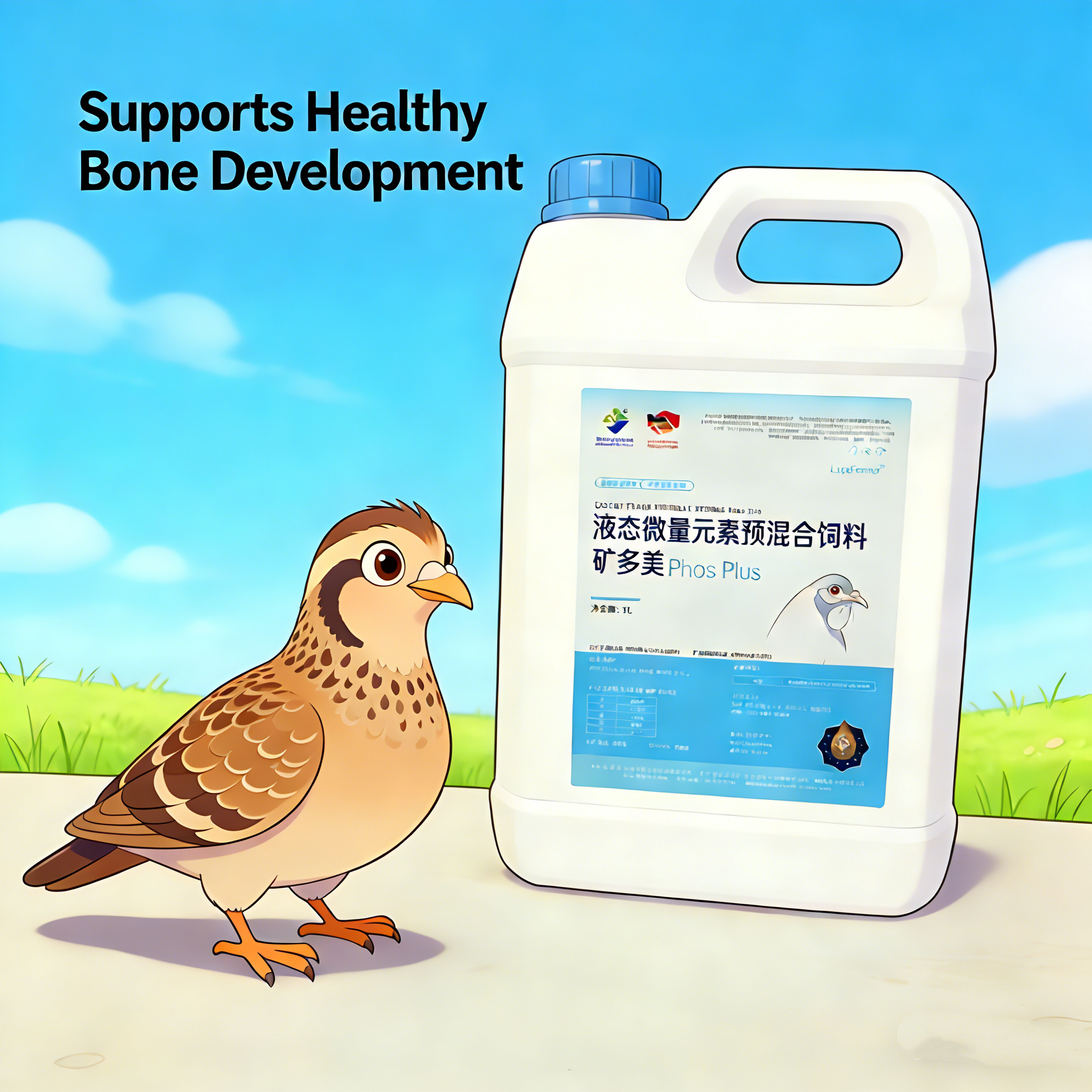
Bone Development in Early Life Determines Lifelong Skeletal Resilience
Critical Windows: Peak bone mineral density acquisition in broilers (16–20 weeks) and dairy heifers (6–8 months)
Bone development in early life follows a narrow, species-specific window during which peak bone mineral density (BMD) is established—setting the ceiling for lifelong skeletal resilience. For broilers, this occurs between 16 and 20 weeks; for dairy heifers, it spans 6 to 8 months. During these phases, bone tissue responds most efficiently to calcium, phosphorus, vitamin D, and mechanical loading from movement and weight bearing. Unlike humans, livestock lack a prolonged adolescent accrual phase—their capacity for rapid bone mineralization is compressed and non-negotiable. Insufficient nutrition or environmental stressors during these weeks directly reduce peak bone mass, with deficits that persist permanently.
Consequence of Missed Opportunities: Minimal post-pubertal capacity to recover compromised cortical thickness or trabecular architecture
Once this critical window closes, the skeleton loses nearly all ability to restore structural deficits. Cortical thickness—the dense outer layer of long bones—and trabecular architecture—the internal honeycomb network—both fail to recover if underdeveloped early. Post-pubertal bone remodeling is slow, limited in scope, and primarily focused on maintenance—not regeneration. A heifer with suboptimal cortical thickness at 8 months carries that weakness into lactation, increasing fracture risk and reducing productive longevity. In broilers, poor trabecular development predisposes birds to leg deformities, lameness, and reduced feed efficiency. There is no practical biological or economic pathway to reverse these deficits later—only prevention before the window closes delivers durable skeletal integrity.
Nutrition-Driven Bone Development Prevents Developmental Orthopedic Diseases
Calcium-Phosphorus Balance: Optimal Ca:P ratio (1.1:1 to 2.5:1) for osteoid mineralization and growth plate integrity
The calcium-to-phosphorus (Ca:P) ratio is foundational to osteoid mineralization and growth plate health. For most livestock, the optimal dietary Ca:P ratio falls between 1.1:1 and 2.5:1, varying by species and production stage. Deviations disrupt skeletal development: ratios below 1.1:1 impair mineralization and increase rickets risk; ratios above 2.5:1 hinder phosphorus absorption and may depress growth. Excess phosphorus relative to calcium triggers secondary hyperparathyroidism, driving mineral resorption from bone. Conversely, phosphorus deficiency compromises ATP-dependent processes—including feed intake and cellular differentiation—indirectly stunting bone formation. Within the ideal range, hydroxyapatite crystals deposit efficiently in the collagen matrix, supporting robust early bone development.
| Ca:P Ratio | Effect on Bone Development |
|---|---|
| < 1.1:1 | Risk of rickets; poor mineralization |
| 1.1:1 – 2.5:1 | Optimal osteoid mineralization; healthy growth plates |
| > 2.5:1 | Impaired phosphorus absorption; potential growth depression |
Vitamin Interplay: How vitamin D deficiency and excess vitamin A disrupt osteoblast/osteoclast signaling
Vitamin D is indispensable for intestinal calcium absorption—and thus for skeletal mineralization. Deficiency causes rickets in young animals and osteomalacia in adults, rendering even balanced mineral intake ineffective. Yet vitamin D’s efficacy depends on its interaction with other fat-soluble vitamins. Excess vitamin A antagonizes vitamin D receptor signaling, suppressing osteoblast activity while stimulating osteoclast-mediated resorption. This imbalance drives net bone loss—even when calcium and phosphorus levels appear adequate. Feed formulations must therefore ensure sufficient vitamin D and avoid hypervitaminosis A to preserve balanced osteoblast/osteoclast signaling and support structural bone integrity.
Production Systems Shape Bone Development Through Mechanical and Metabolic Demands
Laying Hens: Medullary bone dynamics as a calcium buffer—and its trade-off with structural bone integrity
Laying hens face a unique metabolic demand: daily eggshell formation requires ~2 g of calcium—more than their diet typically supplies. To meet this need, they rapidly mobilize calcium from medullary bone, a transient, estrogen-dependent tissue deposited within the marrow cavity. While highly effective as a short-term calcium reservoir, this process draws mineral from structural bone—particularly the cortex—eroding keel and humeral integrity over time. Chronic calcium withdrawal increases fracture incidence, especially in high-producing flocks housed without opportunities for controlled exercise or proper calcium particle-size management. Strategic interventions—such as optimizing coarse limestone inclusion and photoperiod timing—can help synchronize medullary deposition with shell formation, preserving structural bone without compromising egg output.
Ruminants and Poultry: Loading-induced Wnt/β-catenin activation improves cortical bone area by up to 18% under pasture or enriched environments
Mechanical loading is a potent, natural anabolic stimulus for bone. In both ruminants and poultry, weight-bearing activities—grazing on varied terrain, perching, climbing, or navigating complex pens—activate the Wnt/β-catenin signaling pathway in osteocytes. This cascade promotes osteoblast proliferation and periosteal bone formation, increasing cortical bone area by up to 18% compared with animals raised in static, confined conditions. The effect is strongest during early growth, when mechanosensitivity peaks. Critically, this adaptation enhances fracture resistance without added feed costs—making physical activity a high-impact, low-cost lever for improving bone quality across systems. Integrating moderate, daily movement through thoughtful housing design delivers measurable skeletal benefits rooted in fundamental bone biology.
Poor Bone Development Compromises Longevity, Welfare, and Economic Viability
Livestock with suboptimal bone development suffer compounding consequences that erode welfare, productivity, and profitability. Incomplete mineralization or inadequate cortical thickness predisposes animals—especially high-yield dairy cows and fast-growing broilers—to fractures, often resulting in immediate culling or chronic lameness. From a welfare standpoint, compromised bone health causes pain, limits mobility, and impairs access to feed and water—further depressing growth, milk yield, and immune competence. Economically, skeletal injuries are among the costliest production failures: treatment, labour, lost output, and premature culling can total up to $2,000 per affected animal. Preventing these outcomes hinges on two evidence-based pillars—targeted nutritional support during critical developmental windows and consistent mechanical loading through appropriate housing and management. These strategies deliver lasting returns: stronger animals, longer productive lives, and more resilient operations.
FAQ
What are the critical windows for peak bone mineral density acquisition in livestock?
For broilers, the critical window for peak bone mineral density acquisition occurs between 16 and 20 weeks. For dairy heifers, this window spans 6 to 8 months of age.
Why is early bone development important in livestock?
Early bone development sets the ceiling for lifelong skeletal resilience. Any nutritional or environmental deficits during this critical window can lead to permanently reduced bone mass, predisposing animals to fractures, lameness, and decreased productivity.
What is the optimal Calcium-Phosphorus (Ca:P) ratio for livestock diets?
The optimal Ca:P ratio for most livestock falls between 1.1:1 and 2.5:1. Ratios below or above this range can impair bone development, mineralization, and overall growth.
How does vitamin D deficiency or excess vitamin A affect livestock bone health?
Vitamin D deficiency leads to poor calcium absorption, causing rickets in young animals and osteomalacia in adults. Excess vitamin A disrupts vitamin D receptor signaling, leading to bone resorption and imbalances in bone structure.
How can mechanical loading improve bone development?
Weight-bearing activities such as perching or grazing on varied terrain activate the Wnt/β-catenin signaling pathway, enhancing cortical bone formation and improving fracture resistance in both ruminants and poultry.
Table of Contents
- Bone Development in Early Life Determines Lifelong Skeletal Resilience
- Nutrition-Driven Bone Development Prevents Developmental Orthopedic Diseases
- Production Systems Shape Bone Development Through Mechanical and Metabolic Demands
- Poor Bone Development Compromises Longevity, Welfare, and Economic Viability
-
FAQ
- What are the critical windows for peak bone mineral density acquisition in livestock?
- Why is early bone development important in livestock?
- What is the optimal Calcium-Phosphorus (Ca:P) ratio for livestock diets?
- How does vitamin D deficiency or excess vitamin A affect livestock bone health?
- How can mechanical loading improve bone development?